Selkirk Power Air Review: Is It Worth the Price?
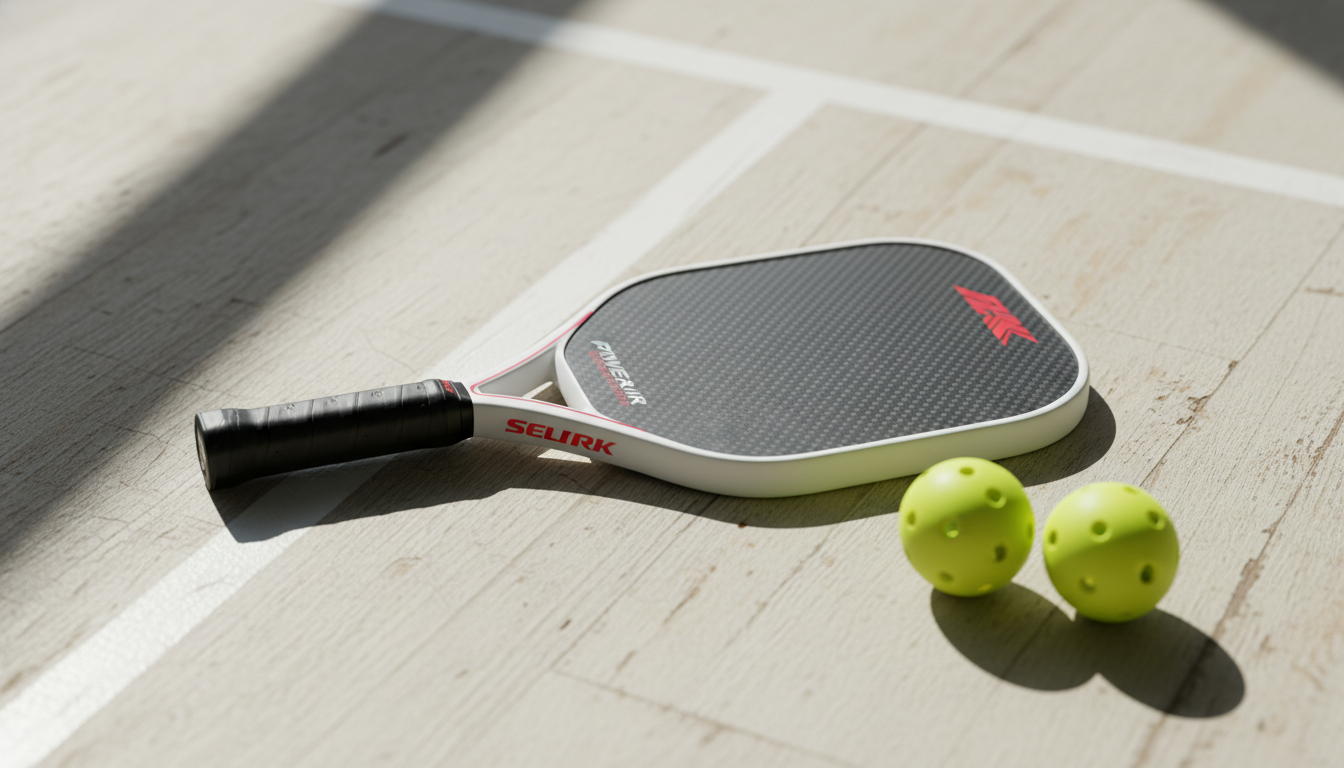
The Power Air is Selkirk’s flagship offensive paddle, built around their Air Dynamic Throat — a vented frame design meant to cut wind resistance on swings. If you’re here, you want to know whether the performance justifies the price tag or whether you’re paying for marketing. Short answer: it’s a legitimately elite paddle for the right player, but it has a specific feel that isn’t for everyone.
What Makes the Power Air Different
Selkirk’s Air Dynamic Throat is the headline feature. The open ports in the throat of the paddle are designed to reduce drag during fast swing exchanges at the net. Whether you’ll notice that in a casual rec game is debatable. At the 4.5+ level where dink wars go 30 balls deep and speed-up attacks are decisive, the reduced drag on aggressive swings is a real advantage.
The face uses Selkirk’s ProSpin+ NextGen Texture — a raw carbon fiber surface that grabs the ball more aggressively than fiberglass or smooth carbon alternatives. Spin generation is genuinely high. Off a full swing, the topspin on a third-shot drop or a roll dink is noticeably heavier than mid-range paddles.
The core is a polypropylene honeycomb built to spec for a stiffer response. This isn’t the softest, most forgiving paddle in Selkirk’s lineup — that’s intentional. Power Air is built to convert on offense, not cushion mishits.
Feel and Sweet Spot
The touch on soft shots is solid but firm. Players who come from softer paddles like the Joola Hyperion CFS or the Franklin Ben Johns Signature may find the Power Air a little rigid at first. Reset shots require a deliberate soft grip — the paddle won’t absorb pace for you the way a softer core does.
The sweet spot is mid-sized. It’s not the forgiving wide-body feel of something like the Paddletek Bantam series. Off-center contact loses pace and spin more noticeably than on a more forgiving paddle. That’s a trade-off Selkirk made deliberately — tighter sweet spot, higher ceiling performance at center contact.
Who this favors:
- Aggressive baseliners who attack from the transition zone
- Players who already have consistent dink mechanics and don’t need forgiveness
- Anyone prioritizing spin generation over soft-game cushion
Power and Speed
This paddle earns its name. Swing weight and stiffness combine to produce above-average pop on aggressive groundstrokes and overhead attacks. Erne and ATP setups feel natural with the Power Air because the paddle doesn’t deaden the ball on wide swings.
The vented throat doesn’t make a dramatic difference you’ll clock in a single session, but over a long match with hundreds of quick exchanges at the kitchen, there’s a cumulative fatigue difference versus a heavier, drag-heavy paddle. It’s a marginal gain — but at competitive levels, marginal gains matter.
Third-shot drops require adjustment time. The stiff response means you need to take pace off intentionally with grip pressure rather than relying on the paddle to soften the shot. Once dialed in, the drops are consistent and heavy with underspin.
Build Quality and Durability
Selkirk’s build quality is among the best in the industry. Edge guard protection is solid, the handle grip (Selkirk’s Sure-Grip) holds up over extended play and doesn’t pack down as quickly as thinner grips on budget paddles.
The raw carbon face does roughen with heavy play over time, which actually increases spin generation initially before eventually wearing to a smoother surface. Expect 12–18 months of competitive play before the texture degrades meaningfully, which is on par with other raw carbon paddles at this tier.
One note: the Air Dynamic Throat ports can collect debris in outdoor play. Wipe them out after dusty or wet conditions — it’s minor maintenance but worth knowing.
Price and Who Should Buy It
The Power Air sits in the $230–$260 range depending on retailer and configuration. That’s top-tier pricing, directly competitive with the Joola Hyperion CFS 16 and the CRBN 1X Power Series.
At that price, you need to be honest about your level. If you’re a 3.5 recreational player, the Power Air’s performance ceiling is above where your game will expose it. A paddle in the $120–$160 range will serve you better. The Power Air makes sense if:
- You’re playing 4.0+ and actively competing
- Your soft game is already sound and you want to add offensive punch
- You’ve demoed it or played with a similar carbon paddle and liked the firm feel
If you’re coming from a softer paddle and value reset-ability, look at the Selkirk Vanguard Power Air Invikta instead — same technology, slightly different geometry with more forgiveness — or go cross-brand to the Joola Hyperion CFS 16, which plays softer with comparable spin output.
Bottom line: The Selkirk Power Air is a legitimate high-performance paddle that rewards offensive, aggressive play at higher skill levels. It’s not a well-rounded all-court tool for developing players — it’s a weapon for players whose game is ready for one.