Veloz Pickleball Paddle Review: Is It Worth It?
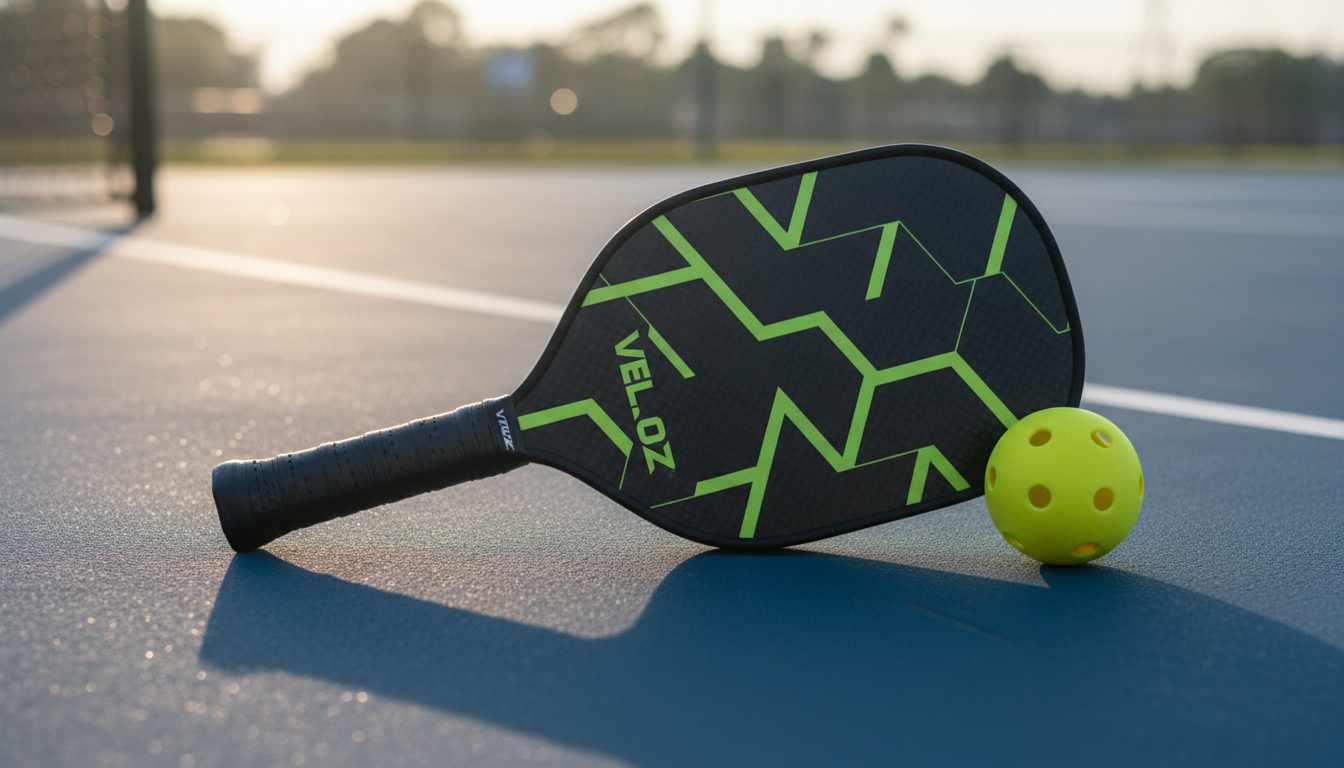
The Veloz has been showing up more frequently in recreational and club play, and players want to know whether the buzz is earned or just good marketing. Short answer: it’s a solid mid-range option with a few genuine strengths and one notable limitation depending on your game style.
What Veloz Gets Right Out of the Box
The first thing most players notice is the feel at the kitchen line. The Veloz uses a carbon fiber face with a textured grit finish that grabs the ball noticeably well on drops and resets. Spin generation is above average for its price bracket—not elite-tier like a Joola Hyperion or a Paddletek Bantam, but competitive with paddles running $10–$20 more.
Build quality feels deliberate. The edge guard sits flush without the lifting or peeling issues that plague cheaper imports. The grip comes wrapped in a medium-dry tape that holds up reasonably well in warm conditions, though players with sweaty hands will want to swap it within a few weeks.
Core Specs and How They Play
The Veloz ships in two configurations: a standard 16mm core and a thinner 13mm option marketed toward power players. The 16mm is the better all-around choice for most people.
- Core: Polypropylene honeycomb, 16mm or 13mm
- Face: Textured carbon fiber
- Weight: Approximately 7.8–8.2 oz depending on the variant
- Grip length: 5.25 inches, which accommodates a two-handed backhand without feeling crowded
- Grip circumference: 4.25 inches standard
The 16mm core gives you the cushioned response you want for dink exchanges and third-shot drops. It absorbs pace without feeling dead. Switch to the 13mm and the paddle pops harder but becomes noticeably less forgiving on off-center hits—a real tradeoff if your contact point wanders under pressure.
Where It Struggles
Power is the Veloz’s ceiling. Baseline drives don’t explode off the face the way they do from a raw carbon or fiberglass hybrid with a stiffer construction. Players coming from something like the Selkirk Vanguard or the Franklin Ben Johns Signature will feel a drop in punch.
The sweet spot is also slightly smaller than the marketing suggests. Shots struck near the throat or toward the upper corners lose more energy than you’d expect from a paddle at this price. That’s not unusual in the category, but it’s worth flagging for players who rely on aggressive angles from the transition zone.
Durability is an open question beyond six months of heavy play. The grit texture on the face can smooth out faster than advertised under daily use, and once that happens, spin performance drops noticeably. Recreational players hitting three times a week should be fine. Tournament grinders may find themselves replacing it sooner than expected.
Who This Paddle Actually Suits
The Veloz is built for the 3.0–3.5 player who’s developing a soft game and wants paddle feedback that rewards proper technique. It’s honest—mishits punish you, clean contact rewards you. That teaching quality is useful.
It also works for the 4.0 player who prioritizes control over power and doesn’t need the paddle to do heavy lifting on drives. If your game is built around placement, patience, and third-shot consistency, the 16mm Veloz earns its place on the court.
Who should skip it:
- Players who drive from the baseline frequently and want pace amplified
- Anyone already comfortable at 4.5+ who needs surgical precision at the net from a larger sweet spot
- Players with aggressive topspin games who need a paddle face that holds grit for 12+ months of tournament play
How It Compares to Similar Paddles
In the same rough price window, the Engage Pursuit MX costs slightly more and offers better durability with a comparable feel. The Selkirk SLK Halo is another alternative with a wider body and more forgiveness on off-center shots.
The Veloz undercuts both on price, which is its strongest argument. If budget is a genuine constraint and you’re playing recreational-to-competitive club ball, it punches above its cost. If you can stretch another $30–$40, the Engage or the SLK Halo likely have longer useful lives.
The Head Radical Tour sits nearby in price too and offers a more power-forward feel for players who want that in a carbon face. Different philosophy, so the comparison depends entirely on your style.
The Setup That Gets the Most Out of It
Run the 16mm version with an overgrip—something like a Tourna Grip or Wilson Pro—layered over the stock wrap. That adds a touch of cushion and helps with sweat absorption.
Weight the throat with 2–3 inches of lead tape if drives feel underpowered. Adding mass there raises swing weight and shores up the biggest criticism of the paddle without significantly compromising maneuverability at the kitchen.
Stock paddle out of the box, the grip feels slightly thin to some players. Sizing up with an overgrip solves it without replacing the handle.
Bottom line: The Veloz is a legitimate option for developing players who want a responsive carbon face at a price that doesn’t sting if they outgrow it in a year. It’s not a forever paddle for serious competitors, but it’s not trying to be—and it’s priced accordingly.